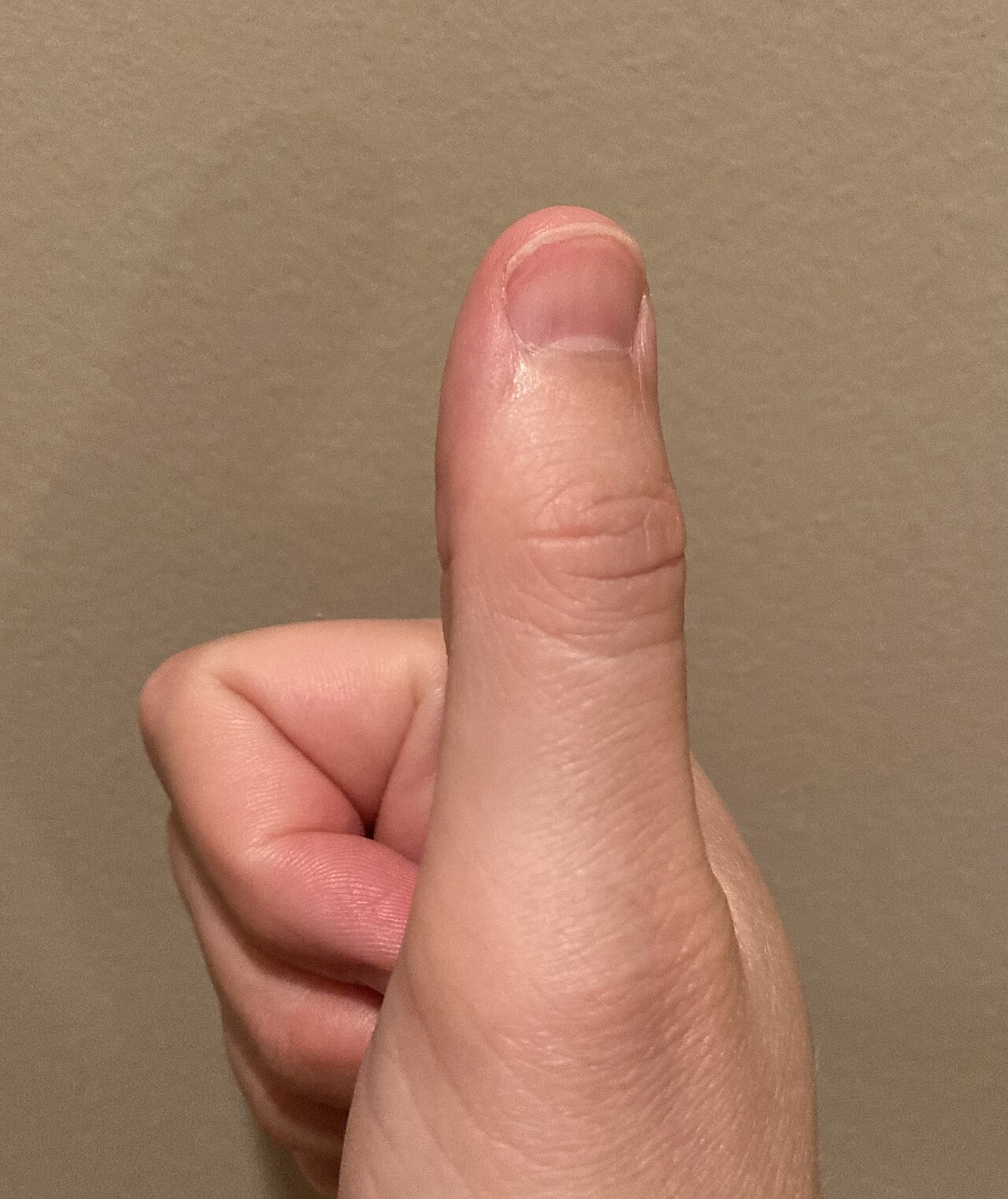
The Unsung Hero: Why Your Thumb Accounts for 40% of Hand Function
Often taken for granted, the thumb is arguably the most crucial digit in the human hand. While we refer to all five terminal members of our hand as "fingers" in a broad sense, the thumb stands apart, both anatomically and functionally. Its unique structure and remarkable mobility are not just biological curiosities; they are the bedrock of human dexterity, enabling everything from the most delicate surgical procedures to the powerful grip needed to swing an axe. Indeed, scientific consensus suggests that this stout digit alone contributes an astonishing 40% to the overall function of your hand. But what precisely makes the thumb such an indispensable powerhouse?
Anatomical Marvel: Distinguishing the Thumb from its Neighbors
From the moment we observe the hand in the medical anatomical position – palm facing forward – the thumb asserts its uniqueness as the outermost digit. Its very name, derived from the Proto-Indo-European word *_tum_ meaning 'swelling,' hints at its robust nature, standing stoutly beside the more slender fingers. While sharing fundamental elements like a skeleton of phalanges, hinge-like joints for flexion, a dorsal nail, and a hairless palmar aspect with fingerprint ridges, the thumb’s differences are profound and functionally significant.
Unlike the other four fingers, the thumb is:
- Opposable: This is its most famous trait, allowing it to flex, abduct, and medially rotate to touch the tips of the other fingers. This opposition is the cornerstone of all precision grips.
- Two Phalanges vs. Three: Traditionally, the thumb is noted for having only two phalanges (proximal and distal) compared to the three found in other fingers. While recent discussions suggest a different interpretation regarding the metacarpal, the consensus on its shorter, sturdier, two-segment structure remains key to its function.
- Broader Distal Phalanx: The tip of the thumb is notably broader than its proximal segment, providing a stable, wide surface for contact and manipulation.
- Attached to a Mobile Metacarpus: The first metacarpal bone, to which the thumb is attached, boasts exceptional mobility, providing the foundation for much of its opposability.
- Curls Horizontally: Instead of curling vertically towards the palm like the fingers, the thumb curls horizontally, allowing for a wrapping motion that is critical for grasping.
These distinctions are not mere academic details; they are the architectural blueprints for the incredible capabilities of the human hand. For a deeper dive into these unique features, consider reading The Thumb's Unique Anatomy: How it Differs from Your Fingers.
The Biomechanics of Dexterity: Joints, Muscles, and Precision
The magic of the thumb lies in its intricate biomechanical design, a complex interplay of joints, muscles, and tendons that grant it unparalleled mobility and strength. Three key joints orchestrate the thumb's vast range of motion:
- Carpometacarpal (CMC) Joint: Located at the base of the thumb, where the first metacarpal meets the trapezium carpal bone, this saddle-shaped joint is the primary engine of opposability. It permits a wide range of movements, including flexion, extension, abduction, adduction, and circumduction – the ability to move in a circle. This unique joint design is fundamental to the thumb’s capacity for versatile manipulation.
- Metacarpophalangeal (MCP) Joint: This condyloid hinge joint connects the proximal phalanx to the first metacarpal. It allows for flexion and extension, as well as some abduction and adduction, adding another layer of adaptability to thumb movements.
- Interphalangeal (IP) Joint: A simple hinge joint between the two phalanges, the IP joint is primarily responsible for flexion and extension, allowing the thumb to curl and straighten at its tip.
Beyond the joints, a sophisticated network of muscles and tendons powers the thumb. Extrinsic muscles, originating in the forearm (such as the flexor pollicis longus and extensor pollicis longus), provide the gross movements, enabling powerful grips. Meanwhile, intrinsic thenar muscles, located within the hand itself (including the abductor pollicis brevis, flexor pollicis brevis, and opponens pollicis), are responsible for the fine, precise movements, particularly the crucial act of opposition. The coordinated action of these muscles, stabilized by robust ligaments and tendons, allows the thumb to exert both formidable power in a hammer grip and exquisite control in a needle pinch.
The 40% Factor: How the Thumb Dominates Hand Function
When experts state that the thumb accounts for 40% of overall hand function, they are quantifying its immense contribution to our daily lives. This statistic isn't arbitrary; it reflects the thumb's critical role in nearly every prehensile activity. Without an opposable thumb, simple tasks like holding a pen, tying a shoelace, buttoning a shirt, or even picking up a glass would become incredibly difficult, if not impossible.
Consider these aspects of the thumb's functional dominance:
- Precision Grips: The ability to pinch objects between the thumb and fingertips (e.g., holding a small screw, typing on a keyboard, threading a needle) relies almost entirely on the thumb’s opposability and fine motor control.
- Power Grips: For tasks requiring strength, such as holding a tool, opening a jar, or climbing, the thumb provides crucial counter-pressure and stability, anchoring the grip. It acts as the "primary mechanical unit" of the hand.
- Manipulation: The complex interplay of its joints allows us to orient objects in our hand, rotate them, and perform intricate movements that other digits simply cannot replicate on their own. This manipulative capability is vital for crafts, artistry, and countless professional skills.
Evolutionarily, the emergence of the opposable thumb around 2 million years ago in the genus Homo was a game-changer. It coincided with the development of advanced tool use, a pivotal adaptation that drove hominin evolution and shaped human civilization. The thumb allowed our ancestors to craft better tools, hunt more effectively, and manipulate their environment with unprecedented efficiency. To explore this fascinating journey, delve into Evolution of the Opposable Thumb: Key to Human Development.
Nurturing Your Thumbs: Practical Tips for Health and Strength
Given the thumb's extraordinary contribution, it's vital to protect and maintain its health. Thumb injuries, conditions like arthritis, or repetitive strain can severely impair hand function, drastically impacting quality of life. Here are some practical tips:
- Ergonomics at Work: If you use a computer mouse or smartphone extensively, pay attention to your grip. Use ergonomic mice, take frequent breaks, and ensure your wrists are in a neutral position to reduce strain on the thumb and wrist joints.
- Stretching and Strengthening: Gentle exercises can help maintain thumb mobility and strength. Try making a loose fist and then extending your thumb outwards, or touch your thumb to each fingertip in sequence. Consult a physical therapist for tailored exercises if you experience discomfort.
- Listen to Your Body: Don't ignore persistent pain or stiffness in your thumb. Conditions like De Quervain's tenosynovitis (a form of repetitive strain injury), thumb basal joint arthritis, or carpal tunnel syndrome can be debilitating if left untreated. Early diagnosis and intervention can prevent further damage.
- Vary Your Activities: Repetitive tasks are common culprits for thumb strain. Try to alternate tasks or find different ways to perform them to reduce stress on specific joints and muscles.
- Mindful Gripping: Be conscious of how tightly you grip objects. Often, we use more force than necessary, leading to fatigue and strain. Practice relaxing your grip when possible.
Conclusion
The thumb, or pollex, is far more than just "another digit." Its unique anatomical structure, sophisticated joint mechanics, and powerful muscle groups converge to create a functional marvel that is indispensable to human existence. Accounting for 40% of hand function, it underpins our ability to interact with the world, craft, communicate, and innovate. Understanding and appreciating its critical role is the first step towards taking better care of this tiny, yet mighty, part of our anatomy, ensuring we can continue to harness its incredible capabilities throughout our lives.