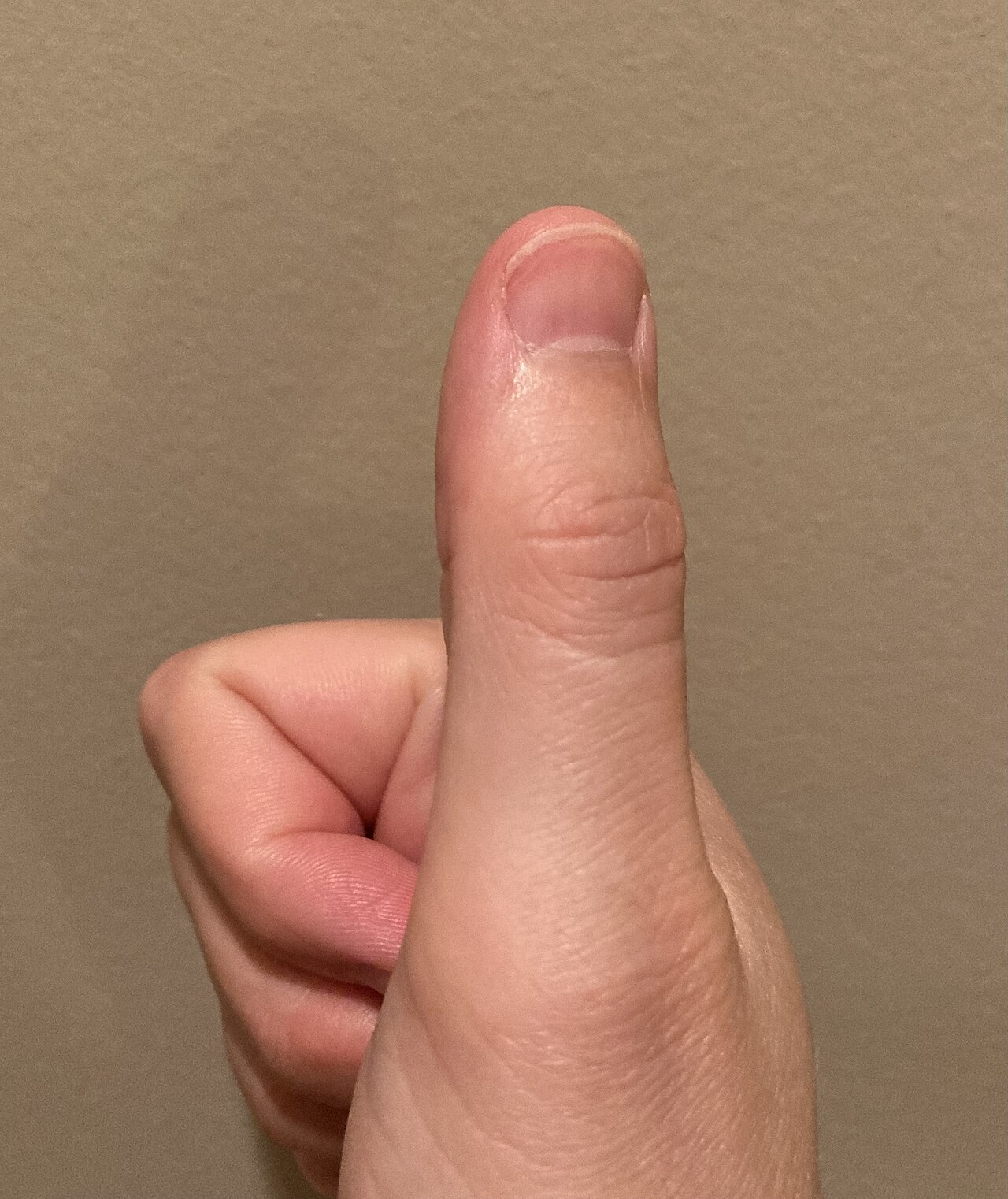
Evolution of the Opposable Thumb: The Unsung Hero of Human Development
The human hand, a marvel of biological engineering, owes much of its incredible versatility and dexterity to a single, distinctive digit: the thumb. Positioned next to the index finger, and famously the outermost digit when the palm faces forward in the anatomical position, the thumb holds a unique status. While sometimes considered a "finger" in the broadest sense (drawing from the Proto-Indo-European root *_penkwe_ related to concepts of fiveness), its stark anatomical and functional differences set it apart. It’s no mere finger; it is the linchpin of our prehensile capabilities, a testament to millions of years of evolution, and undeniably, a key to human development as we know it.
The Unique Anatomy of the Thumb: A Masterpiece of Design
What makes the thumb, or *pollex* as it's known scientifically, so different and so indispensable? While it shares some basic characteristics with its four digital companions—like a skeleton of phalanges joined by hinge-like joints, a dorsal surface adorned with hair and a nail, and a hairless palmar aspect complete with fingerprint ridges—its distinctions are profound.
Unlike the other four fingers, which typically boast three phalanges, the thumb possesses only two: a proximal phalanx and a distal phalanx. This two-bone structure, connected to a single, highly mobile metacarpal bone, contributes to its overall shorter yet far more adaptable form. Recent reports have even suggested alternative interpretations, with some proposing the thumb also has three phalanges but lacks a metacarpal bone, highlighting the depth of its anatomical uniqueness. Furthermore, the thumb's distal phalanx is notably broader than its proximal counterpart, contributing to its robust tip for precision tasks.
The true genius of the thumb's design, however, lies in its joints and supporting musculature. At its base, the saddle-shaped carpometacarpal (CMC) joint, connecting the first metacarpal to the trapezium carpal bone, is a biomechanical marvel. This joint allows for an extraordinary range of motion, including flexion, extension, abduction, adduction, and most crucially, circumduction and opposition. Further up, the metacarpophalangeal (MCP) joint, a condyloid hinge, offers additional flexion, extension, abduction, and adduction. Finally, the interphalangeal (IP) joint, a simple hinge, permits flexion and extension between the two phalanges.
These joints are not only inherently mobile but are also stabilized by strong ligaments and powered by an intricate network of muscles. Extrinsic muscles, originating in the forearm (such as the flexor pollicis longus and extensor pollicis longus), provide the power for gross movements. For fine control and opposition, intrinsic thenar muscles within the hand itself (like the abductor pollicis brevis, flexor pollicis brevis, and opponens pollicis) execute precise actions. This elegant configuration, with robust tendons and balanced muscle forces, gives the
thumb its unique anatomical structure and the resistance needed for both delicate pinch grips and powerful grasps.
Opposability: The Evolutionary Leap
The single most defining feature of the human thumb, and indeed its most significant evolutionary advantage, is its opposability. This term describes the thumb's ability to flex, abduct, and medially rotate, allowing it to touch the tips of any of the other four fingers. This seemingly simple action unlocks a world of complex manipulations that are fundamental to human existence.
Evolutionarily, the opposable thumb emerged as a crucial adaptation in primates, dramatically enhancing their ability to grasp branches, manipulate food, and eventually, wield tools. While many primates possess some degree of thumb opposability, the human thumb reached its modern, highly sophisticated form around 2 million years ago, a timeline that strongly correlates with the emergence of the genus *Homo*. This timing is no coincidence; it’s widely believed that the refinement of the opposable thumb was a primary driver behind the development of advanced tool use, which in turn spurred cognitive and cultural evolution in early hominins.
The biomechanical design of the thumb, particularly its highly mobile carpometacarpal joint, is what produces most of its opposability. This unique design allows the thumb to curl horizontally across the palm, rather than vertically alongside the other fingers. This horizontal movement provides unparalleled reach and strength for precision gripping. The ability to bring the thumb into direct contact with the other fingertips enables a true "precision grip," which is distinct from the power grip used for holding larger objects. This pivotal capability allowed our ancestors to craft sharper stone tools, build shelters, start fires, and ultimately, engineer their surroundings in unprecedented ways. It was a catalyst, accelerating the trajectory of human development and separating us distinctively from other species.
The Thumb's Indispensable Role in Human Life and Development
The functional significance of the thumb is staggering. It accounts for approximately
40% of the overall function of the hand, a figure that underscores its critical role in nearly every daily activity. From the simplest tasks to the most complex, the thumb is constantly engaged. Consider the act of writing, holding a cup, tying shoelaces, opening a jar, operating a smartphone, or even just picking up a coin – all these actions are either impossible or significantly hampered without a functional thumb.
Its biomechanical design, combining robust tendons and balanced muscle forces, provides the necessary resistance for both fine motor tasks and powerful grasps. The thumb allows us to apply force precisely and stably, whether we are delicately threading a needle or powerfully hammering a nail. This dual capacity for precision and power has been instrumental throughout human history, from the development of early agriculture and craftsmanship to modern industrial and technological advancements. Without the nuanced control provided by the thumb, our ability to innovate, create art, perform surgery, or even communicate through sign language would be severely limited. It is, quite literally, the primary mechanical unit of the hand, dictating much of our interaction with the physical world.
Preserving Your Thumb's Function: Practical Insights
Given the thumb's immense contribution to our quality of life, it is crucial to understand how to protect and maintain its function. Due to its constant use and complex mechanics, the thumb is susceptible to various conditions and injuries.
*
Common Issues: Conditions like osteoarthritis, particularly at the CMC joint, are prevalent and can severely impair function, causing pain, stiffness, and weakness. Injuries such as sprains (especially "skier's thumb" affecting the ulnar collateral ligament), fractures, and repetitive strain injuries from extensive typing or phone use are also common.
*
Ergonomics for Prevention: Be mindful of how you use your hands. When typing or using a smartphone, ensure your thumb is not constantly hyper-extended or straining. Take regular breaks and adjust your posture. Ergonomic tools and keyboards can also reduce strain.
*
Strengthening and Stretching: Gentle exercises can help maintain flexibility and strengthen the muscles surrounding the thumb. Simple stretches include gently pulling the thumb back to extend the joints, or making a "C" shape with your hand to stretch the web space between the thumb and index finger. Strengthening exercises can involve squeezing a soft ball or using resistance bands.
*
Proper Gripping Techniques: Avoid overly tight or sustained grips when possible. Distribute weight and pressure across your whole hand rather than relying solely on the thumb.
*
Seek Medical Advice: If you experience persistent pain, swelling, or loss of motion in your thumb, consult a healthcare professional. Early diagnosis and intervention can prevent further damage and help preserve long-term function.
The human thumb is more than just a digit; it is a fundamental pillar of our evolutionary success and daily competence. Its unparalleled anatomy and opposability have not only shaped human development but continue to define our interaction with the world. By understanding its critical role and taking proactive steps to protect its health, we can ensure this extraordinary digit continues to serve us for a lifetime.